
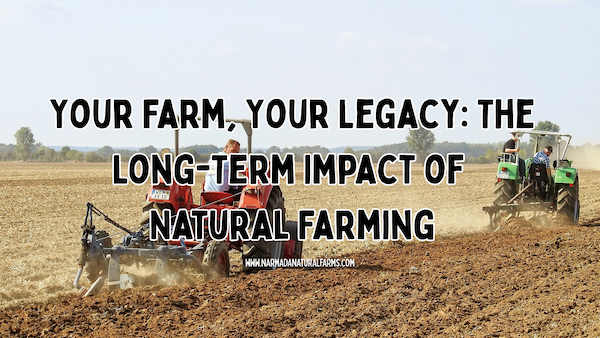
When farmers think about their future, they often look at the next season or the next crop. Yet the long-term impact of natural farming reaches far beyond immediate harvests. It shapes not only the soil and yield but also the legacy you leave behind. For many farmers, the farm is more than land—it is heritage, security, and identity. Choosing natural farming is a way to protect that legacy.
Soil That Lives for Generations
Healthy soil is the foundation of every farm. In natural farming, the focus shifts from chemical dependency to soil regeneration. For example, Sresta Natural Bioproducts (the brand behind 24 Mantra Organic) has worked with thousands of farmers to restore degraded soil. By eliminating synthetic inputs and using farm-based resources like compost, they improved soil fertility and ensured long-term productivity. This means the land can support not just one generation but many to come.
Financial Stability Beyond Seasons
At first, natural farming may seem like a costly switch. However, over time, expenses on chemical inputs vanish. Farmers save on pesticides, fertilizers, and external seeds. A study by Andhra Pradesh Community Managed Natural Farming showed that farmers practicing natural methods consistently earned higher net incomes after three years compared to those in conventional farming. The long-term impact of natural farming creates stability rather than seasonal dependence.
Healthier Food, Stronger Communities
Your farm’s legacy is not just measured in money or land. It is also seen in the food that nourishes families and communities. Brands like Organic India built their entire reputation on farms that practice sustainable methods. Their farmers report pride in knowing that the food they grow carries long-term health benefits. Customers return because they trust the source. That trust strengthens your farm’s reputation as much as the crops themselves.
Protecting Biodiversity for the Future
The long-term impact of natural farming also includes ecological balance. When you reduce chemical use, you allow birds, bees, and beneficial insects to thrive. Biodiversity helps farms withstand climate shifts and pest outbreaks. For instance, Navdanya, the movement led by Dr. Vandana Shiva, has protected more than 4,000 rice varieties through natural farming practices. This preservation is not only ecological wealth but cultural legacy too.
Passing Down a Sustainable Future
Every farm carries stories of hard work, resilience, and dreams. The question is—what kind of land will the next generation inherit? A farm with exhausted soil and mounting debts, or one rich with life, fertility, and respect? The long-term impact of natural farming ensures that children and grandchildren inherit not just property but possibility. It gives them land that sustains and a legacy they can build upon.
Your farm deserves more than short-term results—it deserves a legacy. If you are ready to explore how natural farming can transform your land and secure its future, connect with us today. Together, we can make sure your farm thrives for generations.
📱 Let’s connect on social:
Follow me on Instagram and X (formerly Twitter) for tips, insights, and behind-the-scenes of natural farming. Subscribe to my YouTube channel Natural Farming Made Easy.
Download Rooted In Nature: A practical guide to Natural Farming in India, a comprehensive guide to natural farming, covers essential practices for cultivating a sustainable and productive farm.
Tags: long-term impact of natural farming, narmada natural farms, natural farming feed your family, natural farming is the future of sustainable agriculture, natural farms, pesticide free, pesticide free farming, sankalp sharma, Sustainable Agriculture