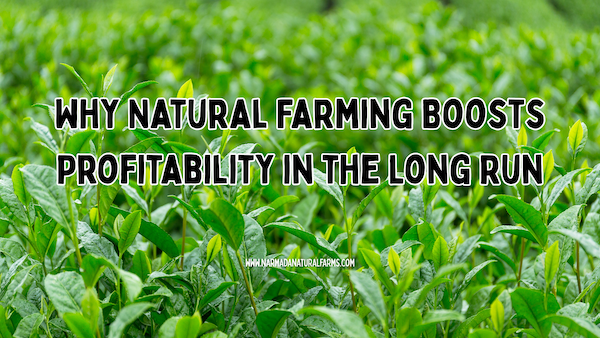
Many farmers wonder whether natural methods can truly pay off compared to chemical-intensive practices. The truth is, natural farming boosts profitability in the long run because it lowers input costs, builds healthier soil, and increases the market value of produce. While the shift requires patience, real-world examples show how small and large farms have made the transition and seen better returns.
Lower Input Costs from Day One
One of the most direct ways natural farming boosts profitability is by reducing expenses. Chemical fertilizers, pesticides, and hybrid seeds often eat up a significant portion of farm income. Natural farming replaces these with on-farm resources such as cow dung, cow urine, crop residue, and green manures.
For example, Subhash Palekar’s Zero Budget Natural Farming (ZBNF) model in India demonstrates how farmers can cut their costs dramatically. Instead of purchasing chemical inputs, they prepare inexpensive formulations like Jeevamrut (a microbial-rich tonic) from cow dung and other farm waste.
Soil Health Creates Compounding Returns
Healthy soil is like a savings account that grows over time. Natural farming practices increase microbial activity, improve water retention, and enhance fertility. Over a few years, the soil becomes self-sustaining, reducing the need for external inputs altogether.
Research from Andhra Pradesh’s natural farming program found that farmers who adopted these methods achieved higher yields over time compared to chemical farming neighbors. The compounding effect of soil health is one of the strongest reasons why natural farming boosts profitability in the long run.
Premium Market Demand for Natural Produce
Consumers today want safe, chemical-free food. Markets for naturally grown vegetables, pulses, and grains fetch higher prices compared to conventional produce. In urban areas, direct-to-consumer models and organic stores are driving this demand further.
For instance, brands like Organic India and 24 Mantra Organic have scaled their business on the promise of chemical-free, natural farming practices. Farmers working with such brands often receive better margins than selling into conventional supply chains. This growing demand ensures natural farming boosts profitability not just through cost savings but also by raising selling prices.
Reduced Risk and Long-Term Stability
Profitability is not only about income but also about risk management. Natural farming reduces dependence on volatile input prices and unpredictable chemical markets. By creating closed-loop systems, farmers insulate themselves from supply chain shocks.
During the pandemic, farmers practicing natural methods were less affected by fertilizer shortages and price hikes. They were able to maintain production and income stability, proving that resilience is part of profitability.
Offbeat Benefits That Add to the Bottom Line
Beyond direct yield and cost, natural farming creates side benefits that often go unnoticed:
-
Livestock Integration: Cows, goats, or poultry provide inputs for farming and secondary sources of income.
-
Carbon Credits: With global discussions on climate-smart agriculture, natural farming may soon open new income streams through carbon credit markets.
-
Community Reputation: Farmers practicing natural methods often gain recognition in local communities and attract partnerships with NGOs or government schemes.
These offbeat factors, though indirect, show how natural farming boosts profitability in ways chemical farming rarely can.
Conclusion
Natural farming is not about overnight gains but about building a sustainable and profitable future. Lower input costs, healthier soil, premium markets, and long-term stability together make it a strong financial model. Real-world success stories from both individuals and brands prove that profitability is not only possible but also more reliable over time. The key is persistence and faith in the process.
Are you ready to make your farm more profitable while protecting your soil and health? Start with small steps in natural farming today.
📱 Let’s connect on social:
Follow me on Instagram and X (formerly Twitter) for tips, insights, and behind-the-scenes of natural farming. Subscribe to my YouTube channel Natural Farming Made Easy.
Download Rooted In Nature: A practical guide to Natural Farming in India, a comprehensive guide to natural farming, covers essential practices for cultivating a sustainable and productive farm.
Tags: narmada natural farms, natural farming boosts profitability, natural farming feed your family, natural farming is the future of sustainable agriculture, natural farming self-assessment, natural farms, pesticide free, pesticide free farming, sankalp sharma, Sustainable Agriculture