
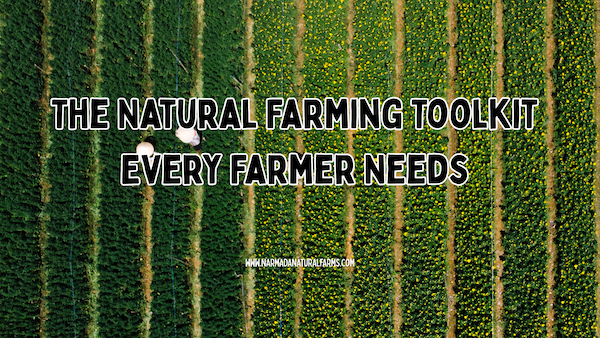
Switching to natural farming is not just about avoiding chemicals. It’s about building a system that nourishes the soil, supports plants, and empowers farmers to work with nature. Having the right natural farming toolkit makes the transition smoother and ensures long-term success.
In this post, we’ll explore the core elements of a natural farming toolkit — from inputs and techniques to digital resources and community support.
Also Read: The First 100 Days of Natural Farming
1. Soil Health Builders
The heart of your natural farming toolkit is soil care. Bio-inputs like jeevamrut, beejamrut, and ghanjeevamrut replenish microbial life. Green manures and cover crops improve fertility while reducing weed growth. Farmers who use mulching not only conserve moisture but also protect beneficial organisms.
Building inputs from locally available materials keeps the farm independent of external suppliers while maintaining low costs. Healthy soil becomes the foundation on which the entire farm thrives.
2. Natural Pest and Disease Control
Every farmer worries about pests. Your toolkit should include neem-based sprays, chilli-garlic solutions, and fermented buttermilk mixtures. Intercropping with pest-repellent plants creates balance in the ecosystem.
The key is prevention through biodiversity, not cure through chemicals. By maintaining plant health and creating habitats for beneficial insects, pest problems naturally reduce over time.
Also Read: How to Talk to Family About Transitioning Your Farm
3. Water and Irrigation Tools
Water is essential for farming. Low-cost drip irrigation kits, clay pot irrigation, and rainwater harvesting units form a vital part of the natural farming toolkit. These practices save water while ensuring consistent soil moisture.
Simple farm ponds, contour bunds, and mulching prevent water runoff and store moisture longer in the soil. This ensures crop cycles remain steady even in challenging weather.
4. Seeds and Diversity
Your toolkit is incomplete without local, open-pollinated seeds. Saving and exchanging seeds within farmer networks builds resilience. Crop diversity — cereals, pulses, vegetables, and fodder — ensures balanced soil nutrition and reduces risks of pest outbreaks.
Seed sovereignty strengthens food security and keeps the farmer in control of the farm’s future. Every seed saved is a step toward independence and sustainability.
Also Read: What Your Soil Is Trying to Tell You
5. Farm Design and Tools
Simple tools make a big difference. Hand weeders, wheel hoes, and broad forks reduce labour while preserving soil structure. Shade nets, compost pits, and small nurseries give flexibility to grow year-round.
Designing the farm with boundary trees, hedges, and water channels creates micro-climates that support both crops and biodiversity. A thoughtful farm layout reduces risks and improves productivity.
6. Knowledge and Digital Access
Knowledge is as important as tools. Your natural farming toolkit should include books, short guides, and access to digital platforms. YouTube channels, WhatsApp groups, and webinars give farmers real-time advice and support.
For instance, Narmada Natural Farms trains farmers through webinars. This has helped thousands adopt new techniques with confidence.
Also Read: The Emotional Journey of Switching to Natural Farming
7. Community and Mentorship
No toolkit is complete without people. Peer groups, cooperatives, and learning circles provide encouragement and practical problem-solving. Farmer-to-farmer training ensures knowledge flows quickly and stays rooted in local conditions.
Joining or forming small producer groups also helps farmers access better markets. Direct connections with consumers build trust and increase profits.
Offbeat Additions for Your Toolkit
-
A Farm Diary: Recording daily activities and outcomes helps refine practices over time.
-
Local Market Connections: Building relationships with small shops, restaurants, or housing societies ensures steady demand.
-
Mindset Tools: Patience, resilience, and openness to learning are as important as physical tools.
Also Read: Why Natural Farming Boosts Profitability in the Long Run
Final Thoughts
The natural farming toolkit is more than a set of items. It is a philosophy that combines soil health, simple innovations, and community power. With the right toolkit, farmers not only reduce costs but also restore land, build dignity, and secure their future.
Are you ready to build your own natural farming toolkit, but not sure where to start? I help farmers design practical, step-by-step toolkits tailored to their specific land, crops, and budget. Reach out today, and let’s put together the tools that will make your farm thrive.
📱 Let’s connect on social:
Follow me on Instagram and X (formerly Twitter) for tips, insights, and behind-the-scenes of natural farming. Subscribe to my YouTube channel Natural Farming Made Easy.
Download Rooted In Nature: A practical guide to Natural Farming in India, a comprehensive guide to natural farming, covers essential practices for cultivating a sustainable and productive farm.
Tags: narmada natural farms, natural farming feed your family, natural farming is the future of sustainable agriculture, natural farming self-assessment, natural farming toolkit, natural farms, pesticide free, pesticide free farming, sankalp sharma, Sustainable Agriculture