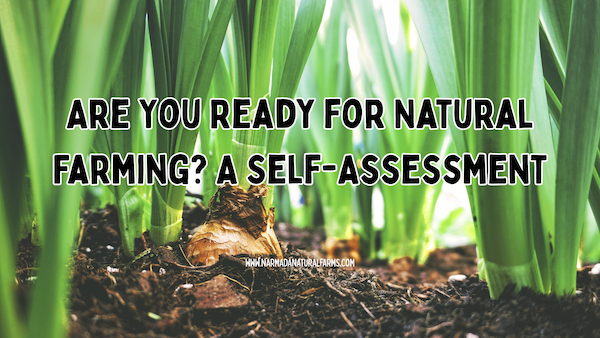
Switching to natural farming can be rewarding, but it also requires preparation. A natural farming self-assessment helps you understand if you are ready for the shift. It allows you to identify gaps, strengths, and the mindset needed for success.
Why a Self-Assessment Matters
Many farmers get inspired by success stories but overlook the challenges. Natural farming relies less on chemicals and more on soil health, microbes, and local resources. That shift demands patience and planning. Conducting a natural farming self-assessment gives you clarity before you invest time, money, and energy.
Key Areas to Reflect On
-
Soil Knowledge
Do you know your soil type and fertility? Natural farming thrives when farmers understand pH, organic matter, and microbial activity. Brands like Soil Foodweb stress the importance of microbial health before reducing inputs. -
Resource Availability
Natural farming often uses on-farm resources like compost, cow dung, or crop residues. Ask yourself: Can you access these regularly? The more you can rely on local materials, the smoother your transition will be. -
Financial Preparedness
Transition periods may reduce yields initially. Do you have a buffer to sustain your family or farm during this adjustment? Being financially ready helps reduce stress and keeps you motivated through the learning curve. -
Mindset and Patience
Natural farming rewards consistency, not shortcuts. Are you prepared to experiment, fail, and learn? Farmers who succeed treat the land as a living system rather than a factory. -
Community and Knowledge Support
Farming is rarely done in isolation. Do you have access to networks, training, or peer groups? Support from others makes problem-solving easier and keeps you encouraged.
Questions to Ask Yourself
-
Am I willing to commit to observing my land closely?
-
Can I rely less on external inputs and more on natural cycles?
-
Do I have the patience to wait for results that may take more than one season?
-
Is my family or team aligned with this shift?
When You’re Not Quite Ready
If your answers reveal gaps, don’t worry. A natural farming self-assessment is not a pass/fail test. It’s a guide. Start small—maybe with one acre or one crop. Learn, adapt, and expand. Farmers who phase their transition often find it easier to sustain momentum.
The Payoff of Preparation
Natural farming brings healthier soil, reduced costs, and sustainable yields. Yet, the true reward is building a farm that supports itself while protecting the environment. Preparing well through a natural farming self-assessment ensures your journey starts strong.
Ready to discover where you stand?
📱 Let’s connect on social:
Follow me on Instagram and X (formerly Twitter) for tips, insights, and behind-the-scenes of natural farming. Subscribe to my YouTube channel Natural Farming Made Easy.
Download Rooted In Nature: A practical guide to Natural Farming in India, a comprehensive guide to natural farming, covers essential practices for cultivating a sustainable and productive farm.
Tags: narmada natural farms, natural farming feed your family, natural farming is the future of sustainable agriculture, natural farming self-assessment, natural farms, pesticide free, pesticide free farming, sankalp sharma, Sustainable Agriculture