 By Sankalp Sharma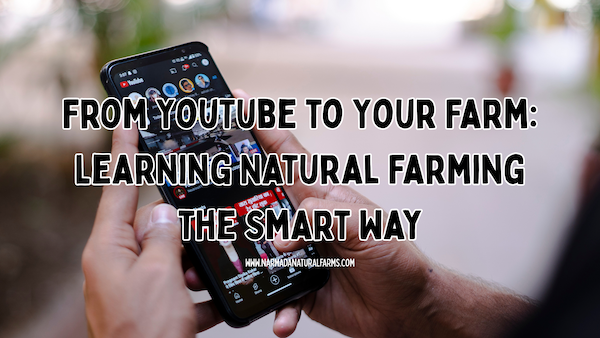
Natural farming is no longer a distant dream. Today, anyone with curiosity and an internet connection can begin to learn natural farming the smart way. What once required years of training from local farmers is now available at your fingertips through YouTube, online communities, and practical guides. But how do you turn that screen time into soil-ready knowledge?
Why YouTube Is a Farmer’s Classroom
YouTube has become the new agricultural university. Farmers across the world are sharing simple yet powerful practices through videos. Topics like soil health, crop rotation, mulching, and water conservation are explained step by step, making them easy to follow.
Unlike traditional training, these videos can be paused, replayed, and tested on your own farm. That freedom allows you to build confidence without rushing.
The Smart Way to Learn Beyond Videos
While YouTube is a starting point, smart learners combine online knowledge with real-world practice. Watch a video on mulching? Try it on a small patch before applying it across your farm. Curious about natural pest control? Experiment on a limited scale first.
Smart farmers also keep a learning journal. Note what you tried, what worked, and what failed. Over time, this becomes your personal textbook.
Also Read: Why Farmers Fail at Natural Farming and How to Avoid It
Blending Online and Ground Practice
The best results come when digital learning is combined with actual fieldwork. Reading, watching, or listening alone won’t make a difference unless it is tested on the soil. By practising step by step, you not only gain confidence but also adapt methods to your land and climate conditions.
The Power of Community
Don’t just watch videos in isolation. Join the comments section, ask questions, and connect with other farmers. Online groups and forums create space for dialogue. One farmer’s mistake becomes another’s lesson. This network effect speeds up collective learning and avoids repeating errors.
Also Read: Before & After: Transformations from Farms That Switched
Thinking Offbeat: Beyond Crops
Learning natural farming the smart way also means thinking beyond cultivation alone. Farmers are now expanding skills into areas like value-addition, sustainable packaging, or even direct-to-consumer sales. Knowledge from online platforms helps them not only improve production but also create new income streams.
Mistakes to Avoid When Learning Online
-
-
Blindly copying without context – What works in one climate may not work in another.
-
Skipping local wisdom – Online learning must complement, not replace, advice from nearby farmers.
-
Overloading on theory – Learning without practice leads to frustration. Start small, test, then scale.
-
Also Read: The Crop Rotation Blueprint for Sustainable Yields
Bringing It All Together
The real shift happens when digital learning meets your soil. Use YouTube as your guide, communities as your support, and your land as your laboratory. With consistency, mistakes turn into lessons and lessons turn into success.
Ready to take your farm from screen to soil? Start small, stay curious, and commit to smart learning. If you want practical resources, curated tutorials, and personal guidance on adopting natural farming methods —
📱 Let’s connect on social:
Follow me on Instagram and X (formerly Twitter) for tips, insights, and behind-the-scenes of natural farming. Subscribe to my YouTube channel Natural Farming Made Easy.
Download Rooted In Nature: A practical guide to Natural Farming in India, a comprehensive guide to natural farming, covers essential practices for cultivating a sustainable and productive farm.